
Yellow Jacket Removal in Rosenberg, TX
Yellow jackets cause more stings than any other wasp in Texas — because their nests are where you least expect them: underground along your fence, inside your walls, under the deck you walk on every day.
The nest you can't see is the dangerous one
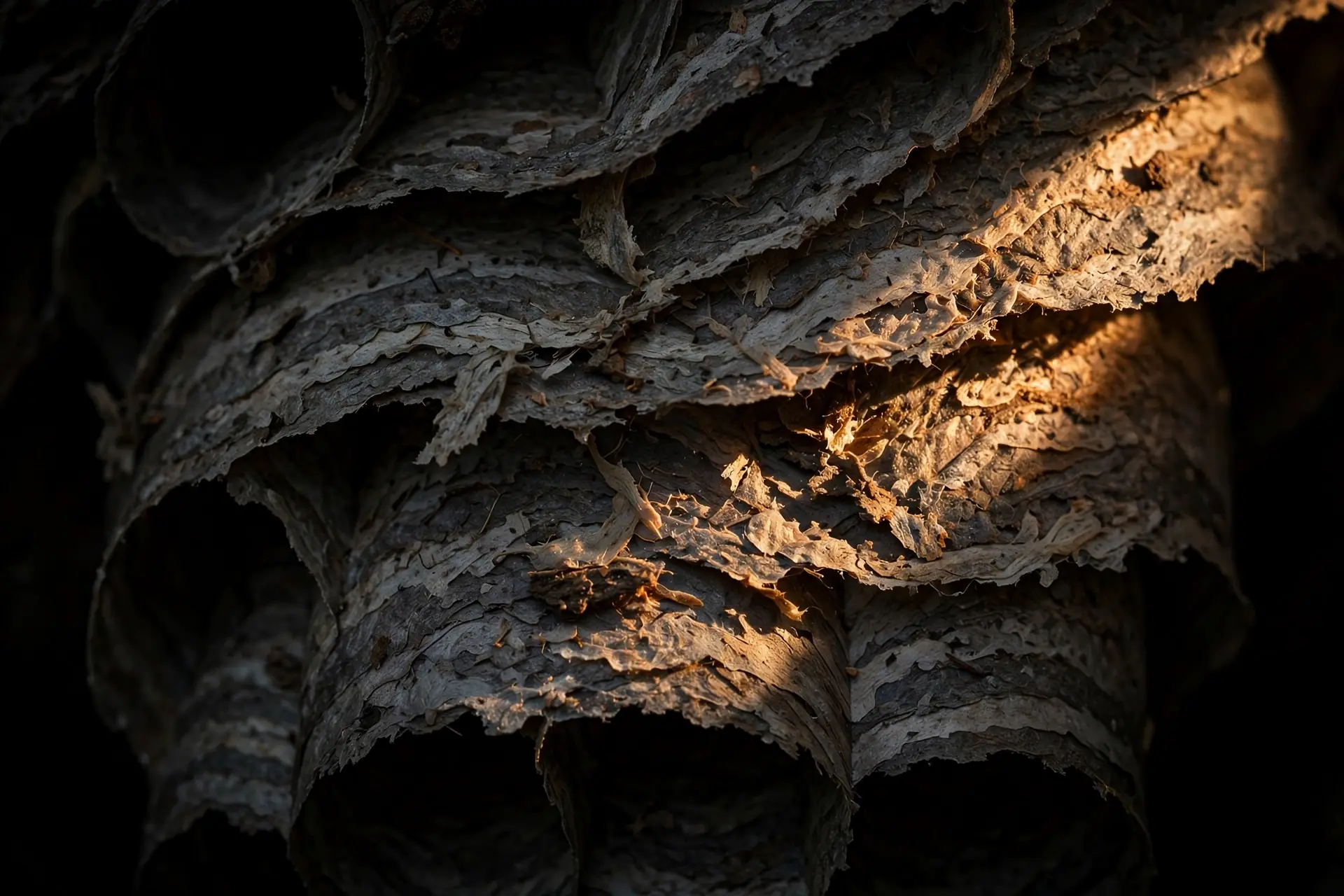
For yellow jacket removal Rosenberg TX, calls usually start the same way: "I was mowing and suddenly they were everywhere," or "there's a steady stream of them going into a hole in the brick." Unlike paper wasps, yellow jackets rarely build where you can see the nest. They nest in abandoned rodent burrows, in the ground along fence lines and garden beds, inside wall voids, and in the hollow spaces under decks and porches.
Why yellow jacket jobs need a professional
A ground nest can hold thousands of workers by late summer, all sharing one or two entrances. Pouring something into the hole or sealing it up traps angry wasps inside — and a sealed ground nest often just finds another exit, sometimes into your house. Wall-void colonies are worse: disturb them from inside and they come through into the living space.
Proper wasp nest removal for yellow jackets means treating the colony at the right time, confirming the nest is fully eliminated, and then sealing the entry points so a new queen doesn't move into the same cavity next year.
What to do right now
- Ground nest: mark it from a distance (a stake or flag 10+ feet away), keep people and pets clear, and don't mow near it.
- Wall void: don't seal the hole yourself — trapped wasps chew through drywall into the house. Don't spray into it either.
- Near a doorway or play area: treat it as urgent and see our emergency wasp removal page.
Our Rosenberg wasp removal service handles yellow jackets across Rosenberg, Richmond, Fulshear, and the surrounding Fort Bend County neighborhoods.
Yellow jacket questions
How do I find a yellow jacket nest in my yard?
Watch where they fly, not where they land. Stand back at a safe distance and follow their flight line — yellow jackets fly straight back to the nest entrance. Late afternoon is easiest, when foragers are returning. Mark the spot from a distance rather than walking up to it.
Can yellow jackets nest inside house walls?
Yes, and it's one of their most common nesting sites. They enter through weep holes in brick, gaps around windows and doors, or openings where utilities enter the house, then build large papery colonies inside the wall void. You may hear buzzing or see them streaming in and out of one small hole.
Why are yellow jackets aggressive in late summer?
By late summer the colony is at its largest and natural food gets scarcer, so yellow jackets turn to human food and sugary drinks — and they're more defensive of the nest. This is when most stings happen: around grills, trash cans, and outdoor gatherings.
Is it safe to mow over a ground nest?
No. Mowing over or near a ground nest is one of the most common ways people get stung badly — the vibration agitates the whole colony. If you suspect a ground nest, rope off the area and call (832) 520-2103.
Yellow jackets where they shouldn't be?
Don't disturb the nest — call and describe what you're seeing.